
LANGO COMMUNITY WALL

Health Talk Shows: Spreading Knowledge, Sharing Wellness We firmly believe that knowledge is the first step towards a healthier life. Through our engaging Health Talk Shows, we bring experts and enthusiasts together to discuss a wide range of health-related topics. These shows serve as a platform for individuals to learn about preventive measures, lifestyle choices, and the latest advancements in medical science. We are dedicated to empowering individuals with the information they need to make informed decisions about their health.
— Healths Projects
Comprehensive Support for the Ill: Beyond Medical Care Illness can take a toll not only on physical health but also on emotional well-being. At Lango, we extend our support beyond medical care by offering financial, material, and emotional assistance to those facing health challenges. Our goal is to alleviate the burdens that come with illness and provide a holistic approach to recovery. Through our network of compassionate individuals and resources, we aim to stand by the side of those in need, helping them regain their strength and hope.
3Collaborative Health Camps: Amplifying Impact Together We understand that unity has the power to magnify our impact. That’s why we collaborate with partners to organize Health Camps that bring essential health services directly to communities. These collaborative efforts allow us to reach a wider audience, providing medical check-ups, screenings, and consultations to individuals who may not have easy access to healthcare. By working together, we can bridge the gap and make a significant difference in the well-being of underserved populations.
4. Raising Health Awareness: Informing and Uplifting Health-related issues can often go unnoticed or misunderstood, leading to adverse consequences. At Lango, we take it upon ourselves to alert people about these issues, equipping them with the knowledge they need to safeguard their health. By raising awareness through campaigns, educational materials, and community outreach, we aim to empower individuals to take proactive steps towards a healthier lifestyle.
5. Restoring Hope Through Compassionate Care We firmly believe in the healing power of hope. For the sick and underserved, a glimmer of hope can make all the difference. Our projects are designed not only to provide medical services but also to restore hope in the hearts of those facing health challenges. Through our unwavering support and compassionate care, we aim to inspire positivity and resilience, fostering an environment where recovery is not just physical, but emotional and mental as well.
6. Health Services for the Underprivileged: Bridging the Gap We are committed to making healthcare accessible to all, regardless of their socio-economic background. Our projects are focused on providing health services to the underprivileged, ensuring that everyone has the opportunity to lead a healthy life. By addressing the gaps in healthcare access, we are striving to create a more equitable and inclusive society
ORONO
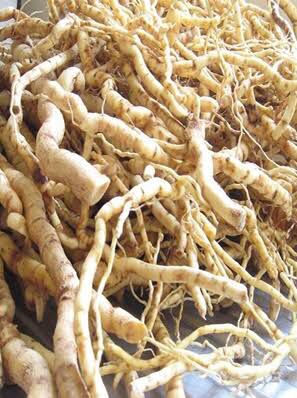
The fresh or dried leaves are cooked, sometimes with peanut butter, and eaten as a vegetable. The dried powdered leaves are added to food as a condiment. The plant is widely used medicinally throughout its range, the root especially being valued. An aqueous root extract administered to human spermatozoa in vitro was found to enhance total motility as well as progressive motility in a time-dependent manner. Both the roots and the root bark have a pronounced vanilla-like odour and taste like a mixture of liquorice and ginger.
The root is especially highly valued throughout Africa as an aphrodisiac – the fresh or dried roots are chewed to treat sexual weakness, prevent premature ejaculation and to increase sperm production. A decoction or infusion is widely taken to treat digestive troubles including gastro-intestinal problems, stomach-ache, indigestion, constipation, anorexia, and as a restorative and appetite stimulant. The decoction is also used to treat a wide range of other conditions, including urinary infections, gonorrhoea, jaundice, coughs, bronchitis, chest complaints, headache, paralysis and epileptic attacks, depression, to relieve body pains and to treat fits in children.
The root is pulverized and added to porridge in order to treat schistosomiasis. A plant extract is taken to treat malaria. The leaves are squeezed in water and the filtrate is drunk to stop heavy post partum bleeding. A leaf decoction is drunk to stop vomiting. The seeds are used as a substitute for Strophanthus seeds in the preparation of arrow poison
ACUGA
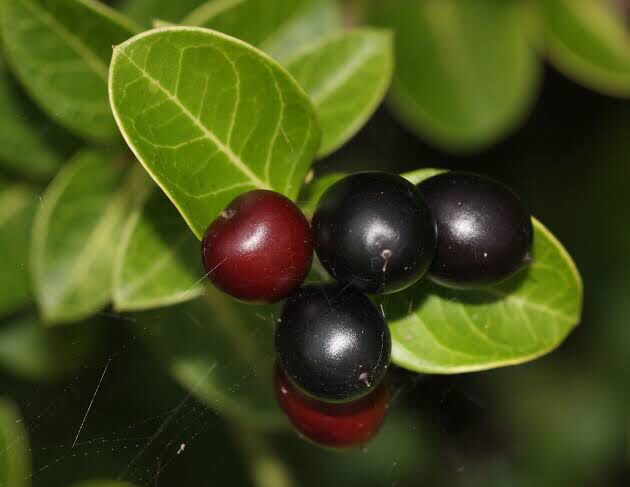
ThCarissa edulis (Apocynaceae family) is a highly valuable medicinal plant found in many communities used to treat a number of conditions traditionally like: headache, chest complaints, rheumatism, gonorrhoea, syphilis, rabies, herpes, malaria and as a diuretic among others. The ripe fruits of Carissa edulis are very sweet and pleasant to eat making it one of the most cherished plants by those who know it
Historically, the Carissa edulis plant has provided a source of inspiration for a number of communities providing large contributions to human health and well-being. The plant is one of the most prevalent traditional cures and communities harvest roots, barks and even the fruits to make concoctions for many diseases.
Traditionally, decoctions of roots of Carissa edulis are used as painkiller. The decoction is taken warm and in small quantities to treat indigestion and for abnormal pains especially during pregnancy. The fruits are used in the treatment of dysentery. The powdered root is used as a remedy for chest complaints. An infusion made from the roots is drunk to ease stomachache, as a cough remedy or is dropped into the eye for cataract problems.
Roots contain carissin substance, which can be used to treat cancer. The decoction from the root of Carissa edulis is known to be used by a number of communities for treatment and management of malaria and for treating polio symptoms. The root of Carissa edulis is credited with stomachic, antidiarrhoel and antianthelmintic properties. This is why the root infusion is used in treatment of stomach ache and diarrhea.
The root bark decoction of C. edulis has been used as a good diuretic making it to be used for the treatment of high blood pressure. The decoction acts on the kidneys to increase urine output, reducing the amount of fluid in the blood, which in turn lowers blood pressure.The boiled leaves of Carissa edulis are applied as poultice to relieve toothache. Root scrapings are used for glandular inflammation; ground-up roots are used as a remedy for venereal diseases, to restore virility, to treat gastric ulcers, and as an expectorant in many communities
Home Made Health Remedies (available online)
Most people in Lango can afford private clinics. Here are some preventative health tips available online. Please share widely on how to make Oral Rehydration Solutions (ORS) with people at home.
Oral Rehydration Solutions: Made at Home
http://rehydrate.org/solutions/homemade.htm
Management of a Child with measles
http://hetv.org/resources/measles.htm
Honey: its medicinal property and antibacterial activity
http://www.ncbi.nlm.nih.gov/pmc/articles/PMC3609166/
Medicinal-Plants-Used-in-the-Treatment-and-Prevention-of-Malaria-in-Northern-Uganda
| Scientific name [family] local name (Langi), voucher no. | Mode of preparation and administration |
|---|---|
| Moringa oleifera Lam. [Moringaceae] Moringa** / AG505 | Boil handful of fresh leaves in a cup of water. Drink one glass 3 times a day for adults. For children, give 1 tsp 3 times a day. Roots chewed raw or boiled & drunk 2 times a day. Pick & chew handful of fresh leaves 2–3 times a day for 3–4 days. |
| Curcuma longa L. [Zingiberaceae] Binjari** / AG506 | Pick a piece of rhizome, pound it with 30 ml water, & drink twice a day for 3 days. |
| Senna siamea (Lam.) H.S.Irwin & Barneby [Fabaceae] Garcia** / AG507 | Pound fresh roots. Squeeze out juice with a little water in a cup. Take one cup (about 500 ml) once a day for 3 days. |
| Tithonia diversifolia (Hemsl.) A.Gray [Asteraceae] Akechakech / AG508 | Boil handful of fresh/dry leaves in a cup of water. Adults drink 1 glass 3 times a day. Children take 1 tsp 3 times a day. Take for 4 days. Can be mixed with other herbs e.g., Baccharoides adoensis & Schkuhria pinnata. |
| Ocimum forsskaolii Benth. [Lamiaceae] Yat cola / AG509 | Squeeze handful of fresh/dry leaves in warm water & use for bathing patient once a day to manage fever. Leaves are sun dried & burnt in the house to produce smoke to repel mosquitoes |
| Manihot esculenta Crantz [Euphorbiaceae] Mogo / AG515 | Peelings are sun dried & burnt in the house to produce smoke to repel mosquitoes. |
| Musa sp. [Musaceae] Abolo kwon / AG517 | Peelings are sun dried & burnt in the house to produce smoke to repel mosquitoes. |
| Gossypium hirsutum L. [Malvaceae] Pama / AG516 | Cotton lint is sun dried & burnt in the house to produce smoke to repel mosquitoes. |
| Cleome gynandra L. [Cleomaceae] Akeyo / AG519 | Leaves cooked with groundnut paste & eat- en as sauce for malaria prevention |
| Hoslundia opposita Vahl [Lamiaceae] Itutu / AG511 | Squeeze handful of fresh leaves in water & use for bathing. |
| Solanum americanum Mill. [Solanaceae] Ocuga / AG518 | Leaves cooked with groundnut paste & eat- en as sauce for malaria prevention. |
| Carica papaya L. [Caricaceae] Apapalo / AG512 | Mix with fresh leaves of Baccharoides adoensis & Tithonia diversifolia, boil & drink. Used in whole body steam baths as well. |
| Citrus sp. [Rutaceae] Cungwa / AG513 | Cut 4 oranges & mix with 3 cups (~30 ml) of cool water. Drink 3 cups 3 times a day for 1 day. |
| Pseudarthria hookeri Wight & Arn. [Fabaceae] Abokecwari / AG 514 | Pound handful of fresh leaves & mix with cool water & drink 1 tsp 3 times a day for 4 days. |
| Cucurbita maxima Duchesne [Cucurbitaceae] Acuca / AG520 | Leaves cooked with groundnut paste & eat- en as sauce. |
| Schkuhria pinnata (Lam.) Kun- tze ex Thell. [Asteraceae] Chloroquine apure / AG500 | Boil fresh leaves, filter & drink. Children 1×3 tsp. Adults 1×3 tbsp. Used singly or mixed with other herbs e.g., Aloe vera & Baccha- roides adoensis Use syrup measurement cup (1.2 ml, 3 times a day for 2 days). |
| Baccharoides adoensis (Sch. Bip. ex Walp.) H.Rob. [Asteraceae] Okellokello / AG501 | Boil fresh leaves, filter & drink. Children 1×3 tsp. Adults 1×3 tbsp. Used singly or mixed with other herbs e.g., Aloe vera. Use syrup measurement cup (1.2 ml, 3 times a day for 2 days). Also leaves are squeezed (a hand- ful), mixed with water & used for bathing. |
| Azadirachta indica A.Juss [Meliaceae] Neem** / AG502 | Boil fresh leaves, filter & drink. Children 1×3 tsp. Adults 1×3 tbsp. Used singly or mixed with other herbs e.g., Aloe vera. Fresh leaves chewed for 3 days 3 times a day |
| Crotalaria ochroleuca G.Don [Fabaceae] Alayo / AG503 | Pound fresh leaves, squeeze out the juice & drink it. Children 1×3 tsp. Adults 1×3 tbsp. Also eaten as sauce. Used for un- complicated malaria & as prophylaxis. Males take it for 3 days, females for 4 days. For prophylaxis, leaves cooked with groundnut paste & eaten as sauce. |
| Aloe vera (L.) Burm.f. [Xanthorrhoeaceae] Aloe vera** / AG504 | Boil fresh leaves, filter & drink. Children 1×3 tsp. Adults 1×3 tbsp. Used singly or mixed with other herbs. |